Humidification & Dust Control: Getting Facilities Summer‑Ready
الترطيب ومكافحة الغبار: تجهيز المنشآت لفصل الصيف
The Reminder We All Grew Up With
Our parents always reminded us to drink enough water to keep ourselves hydrated. That reminder is sweet and sound — and we've grown up with it. It's become second nature, a norm woven into family culture across generations.
But what if I told you that external humidification is just as important?
We drink water to keep our body heat down and to stay hydrated so we don't go into over‑retention. But our outer body — our skin, our eyes, our respiratory tract — also needs optimal humidification to stay healthy, prevent cracks, and avoid creating an environment where bacteria can thrive.
التذكير الذي نشأنا عليه جميعاً
كان آباؤنا يذكروننا دائماً بشرب كمية كافية من الماء للحفاظ على ترطيب أجسامنا. هذا التذكير جميل وصحيح — وقد نشأنا عليه. أصبح طبيعة ثانية، قاعدة منسوجة في ثقافة العائلة عبر الأجيال.
لكن ماذا لو أخبرتك أن الترطيب الخارجي لا يقل أهمية؟
نشرب الماء للحفاظ على حرارة أجسامنا منخفضة وللبقاء رطبين حتى لا ندخل في حالة احتباس مفرط. لكن أجسامنا الخارجية — بشرتنا، أعيننا، جهازنا التنفسي — تحتاج أيضاً إلى ترطيب مثالي للبقاء بصحة جيدة، ومنع التشققات، وتجنب خلق بيئة يمكن للبكتيريا أن تزدهر فيها.
🏜️ The Desert Climate Reality
In the UAE and across the GCC, the challenge is extreme. Outdoor humidity can reach up to 90% during summer months, yet indoor environments — dried out by continuous air conditioning — can plummet to as low as 25% relative humidity. Air‑conditioning systems that lack proper humidification often result in indoor dryness falling below 30% relative humidity.
This isn't just uncomfortable. It's a health risk.
When humidity drops below 40%, respiratory tissues become dehydrated, increasing irritation and inflammatory responses. Low indoor air humidity causes vulnerable eyes and airways to dry out, leading to less efficient mucociliary clearance — your body's natural defence mechanism for removing pathogens from the respiratory tract.
🏜️ واقع المناخ الصحراوي
في الإمارات وعبر دول الخليج، التحدي شديد. يمكن أن تصل الرطوبة الخارجية إلى 90% خلال أشهر الصيف، ومع ذلك يمكن أن تنخفض البيئات الداخلية — المجففة بسبب تشغيل المكيفات المستمر — إلى ما يصل إلى 25% رطوبة نسبية. غالباً ما تؤدي أنظمة التكييف التي تفتقر إلى الترطيب المناسب إلى انخفاض الرطوبة الداخلية إلى أقل من 30%.
هذا ليس مجرد عدم راحة. إنه خطر صحي.
عندما تنخفض الرطوبة إلى ما دون 40%، تجف الأنسجة التنفسية، مما يزيد من التهيج والاستجابات الالتهابية. تتسبب الرطوبة المنخفضة في جفاف العيون والممرات الهوائية الضعيفة، مما يؤدي إلى كفاءة أقل في التصفية المخاطية الهدبية — آلية الدفاع الطبيعية في جسمك لإزالة مسببات الأمراض من الجهاز التنفسي.
🌪️ The Dust Factor: A Double Threat
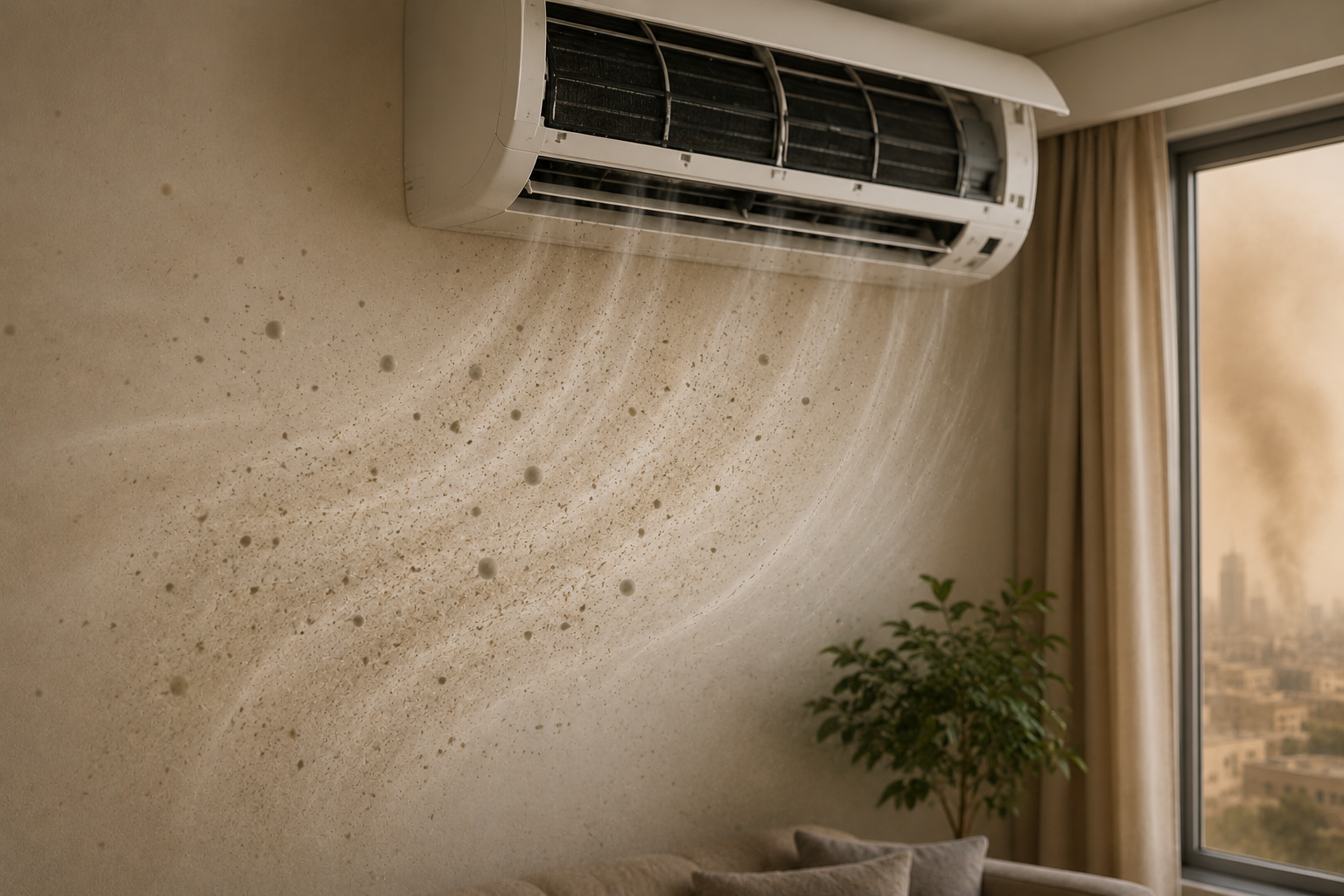
Now add the Shamal winds.
Spring and summer bring dust storms sweeping across the Arabian Peninsula, loading the air with tons of suspended particles. During dusty weather, hospitals across the UAE report a rise in patients presenting with coughing, wheezing, shortness of breath, and throat irritation.
Here's what happens inside your facility:
- Dust enters through windows, doors, and ventilation gaps
- Your AC sucks it in — filters become clogged with desert grit
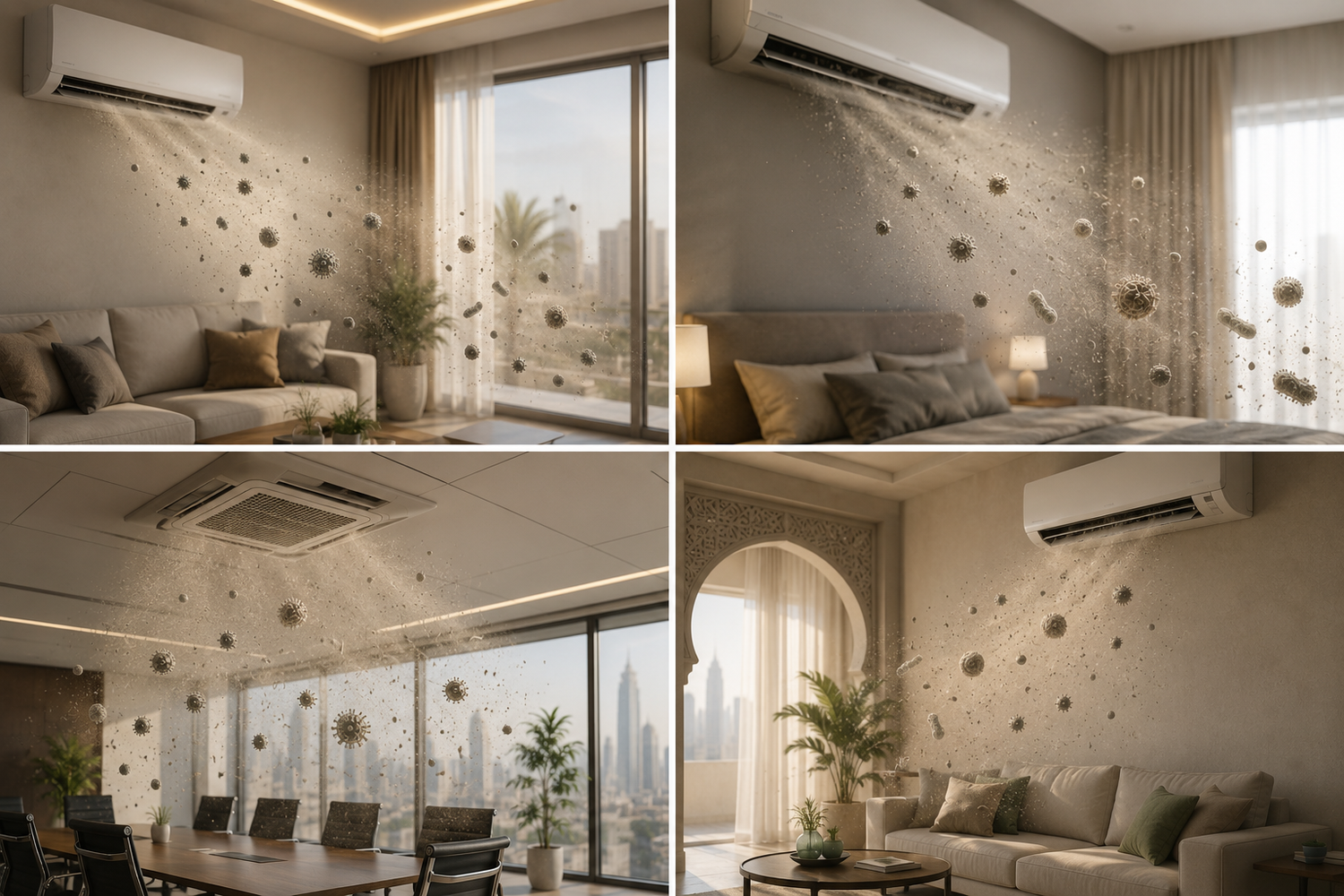
- The dust recirculates — your AC isn't cleaning the air; it's recycling the same polluted air
- Occupants suffer — headaches, throat irritation, and worsened allergy symptoms
Your AC isn't cleaning the air — it's recycling the same dust, over and over again.
🌪️ عامل الغبار: تهديد مزدوج
أضف الآن رياح الشمال.
يجلب الربيع والصيف عواصف ترابية تجتاح شبه الجزيرة العربية، محملة الهواء بأطنان من الجسيمات العالقة. خلال الطقس المغبر، تبلغ المستشفيات في جميع أنحاء الإمارات عن زيادة في المرضى الذين يعانون من السعال والصفير وضيق التنفس وتهيج الحلق.
إليك ما يحدث داخل منشأتك:
- يدخل الغبار عبر النوافذ والأبواب وفجوات التهوية
- يمتصه مكيفك — تصبح الفلاتر مسدودة برمال الصحراء
- يعاد تدوير الغبار — مكيفك لا ينقي الهواء؛ إنه يعيد تدوير نفس الهواء الملوث
- يعاني السكان — الصداع وتهيج الحلق وتفاقم أعراض الحساسية
مكيفك لا ينقي الهواء — إنه يعيد تدوير نفس الغبار، مراراً وتكراراً.
📊 The Science of Optimal Humidity
So what's the right level?
According to ASHRAE guidelines, the recommended indoor relative humidity level typically ranges from 30% to 60%. However, studies have shown that maintaining levels between 40% and 60% can help reduce the survival and transmission of viruses and bacteria.
| Humidity Level | What Happens |
|---|---|
| Below 30% | Dry eyes, irritated sinuses, increased susceptibility to respiratory infections |
| 30% – 40% | Suboptimal; respiratory tissues begin to dehydrate |
| 40% – 60% | ✅ Optimal — reduces viral transmission, prevents mould growth, supports immune defences |
| Above 60% | Mould growth risk increases; viruses survive longer on surfaces |
A study in UAE healthcare facilities demonstrated that maintaining 45‑55% humidity reduces influenza transmission rates by up to 30% compared to drier environments.
📊 علم الرطوبة المثلى
إذاً ما هو المستوى المناسب؟
وفقاً لإرشادات ASHRAE، يتراوح مستوى الرطوبة النسبية الداخلية الموصى به عادةً من 30% إلى 60%. ومع ذلك، أظهرت الدراسات أن الحفاظ على مستويات بين 40% و 60% يمكن أن يساعد في تقليل بقاء وانتقال الفيروسات والبكتيريا.
| مستوى الرطوبة | ماذا يحدث |
|---|---|
| أقل من 30% | جفاف العيون، التهاب الجيوب الأنفية، زيادة القابلية للإصابة بالتهابات الجهاز التنفسي |
| 30% – 40% | دون المستوى الأمثل؛ تبدأ الأنسجة التنفسية بالجفاف |
| 40% – 60% | ✅ مثالي — يقلل انتقال الفيروسات، يمنع نمو العفن، يدعم الدفاعات المناعية |
| أعلى من 60% | يزداد خطر نمو العفن؛ تعيش الفيروسات لفترة أطول على الأسطح |
أظهرت دراسة في مرافق الرعاية الصحية الإماراتية أن الحفاظ على رطوبة 45‑55% يقلل معدلات انتقال الإنفلونزا بنسبة تصل إلى 30% مقارنة بالبيئات الأكثر جفافاً.
💰 The Hidden Cost of Unmanaged Air
Unmanaged dust and improper humidity don't just affect health — they impact productivity and absenteeism.
Sick Building Syndrome (SBS) — characterised by scratchy eyes, sore throats, and headaches that linger until you step outside — is quietly draining productivity across the region's commercial buildings. In the Middle East, where buildings rely entirely on air‑conditioning with minimal natural ventilation, the risks are compounded.
The impact is measurable:
- Reduced respiratory illness and allergies
- Improved sleep, focus, and productivity
- Lower absenteeism
💰 التكلفة الخفية للهواء غير المدار
الغبار غير المدار والرطوبة غير المناسبة لا تؤثر فقط على الصحة — بل تؤثر على الإنتاجية والتغيب عن العمل.
متلازمة المباني المريضة (SBS) — التي تتميز بجفاف العيون والتهاب الحلق والصداع الذي يستمر حتى تخرج إلى الخارج — تستنزف الإنتاجية بهدوء في المباني التجارية في المنطقة. في الشرق الأوسط، حيث تعتمد المباني بالكامل على التكييف مع الحد الأدنى من التهوية الطبيعية، تتفاقم المخاطر.
التأثير قابل للقياس:
- تقليل الأمراض التنفسية والحساسية
- تحسين النوم والتركيز والإنتاجية
- انخفاض التغيب عن العمل
🛡️ The Solution: Humidification + Dust Control
Getting your facility summer‑ready means addressing both humidification and dust control.
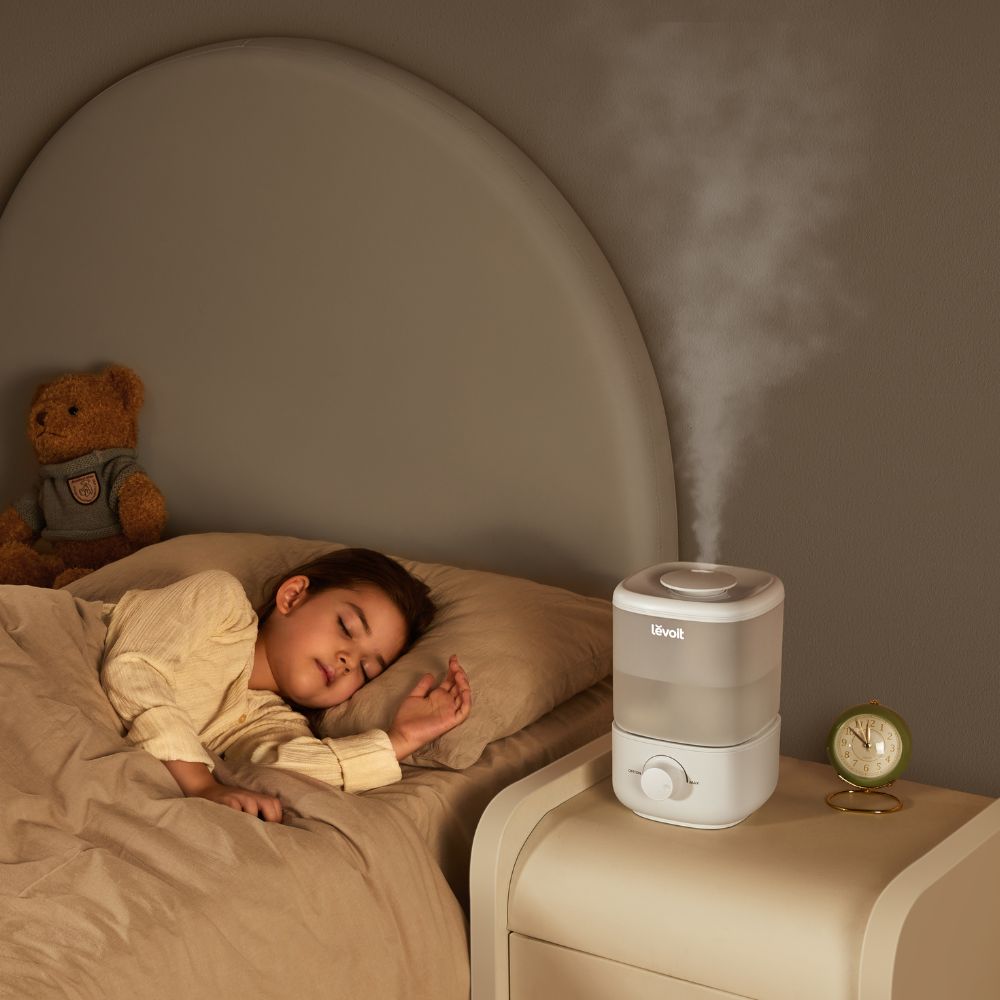
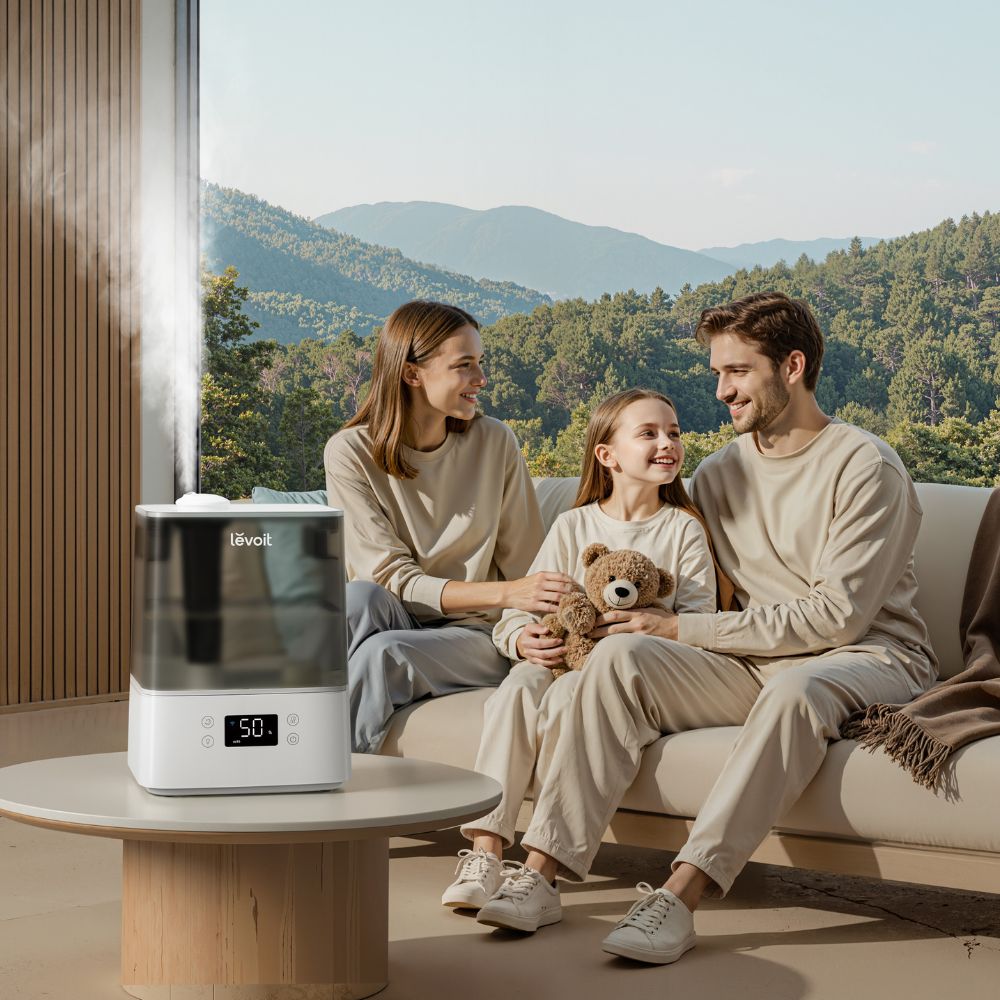
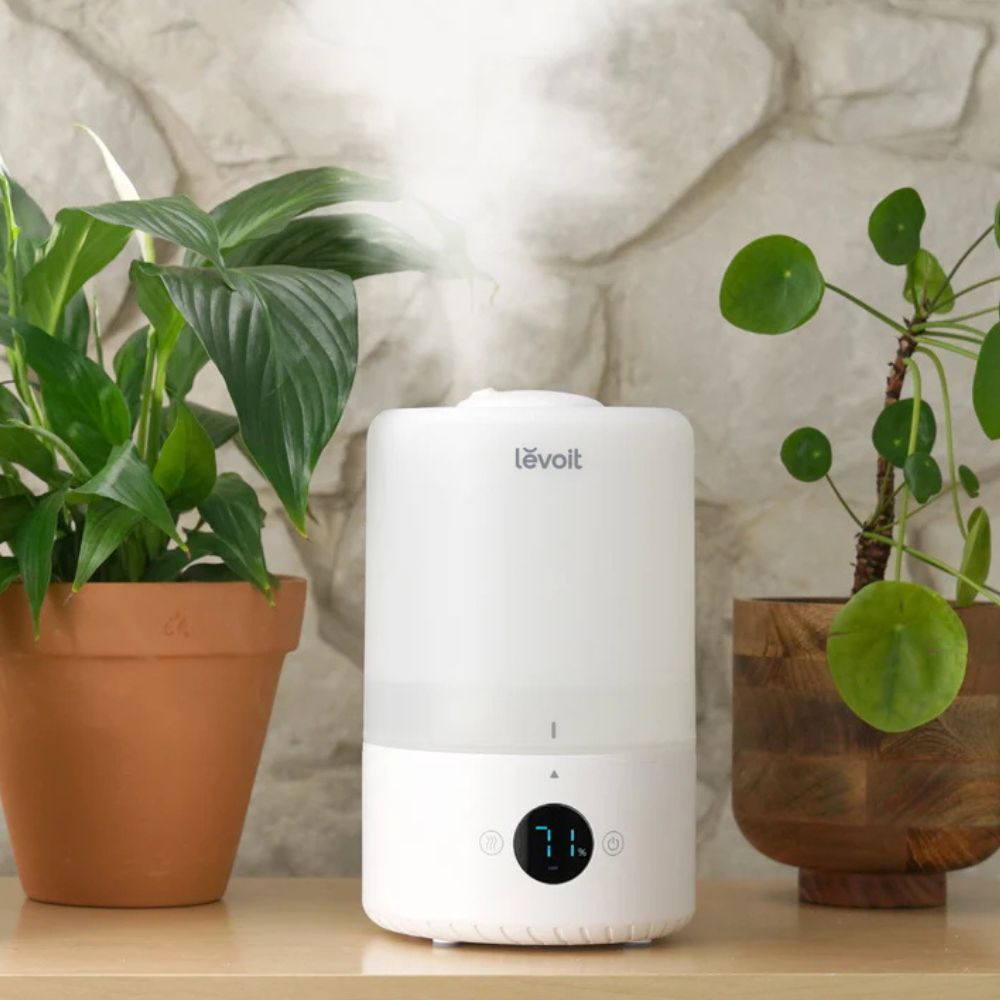
Humidification maintains optimal moisture levels, protecting occupants from dry air symptoms and reducing viral transmission.
Dust control removes the particles that AC systems recirculate, preventing respiratory irritation and allergy flare‑ups.
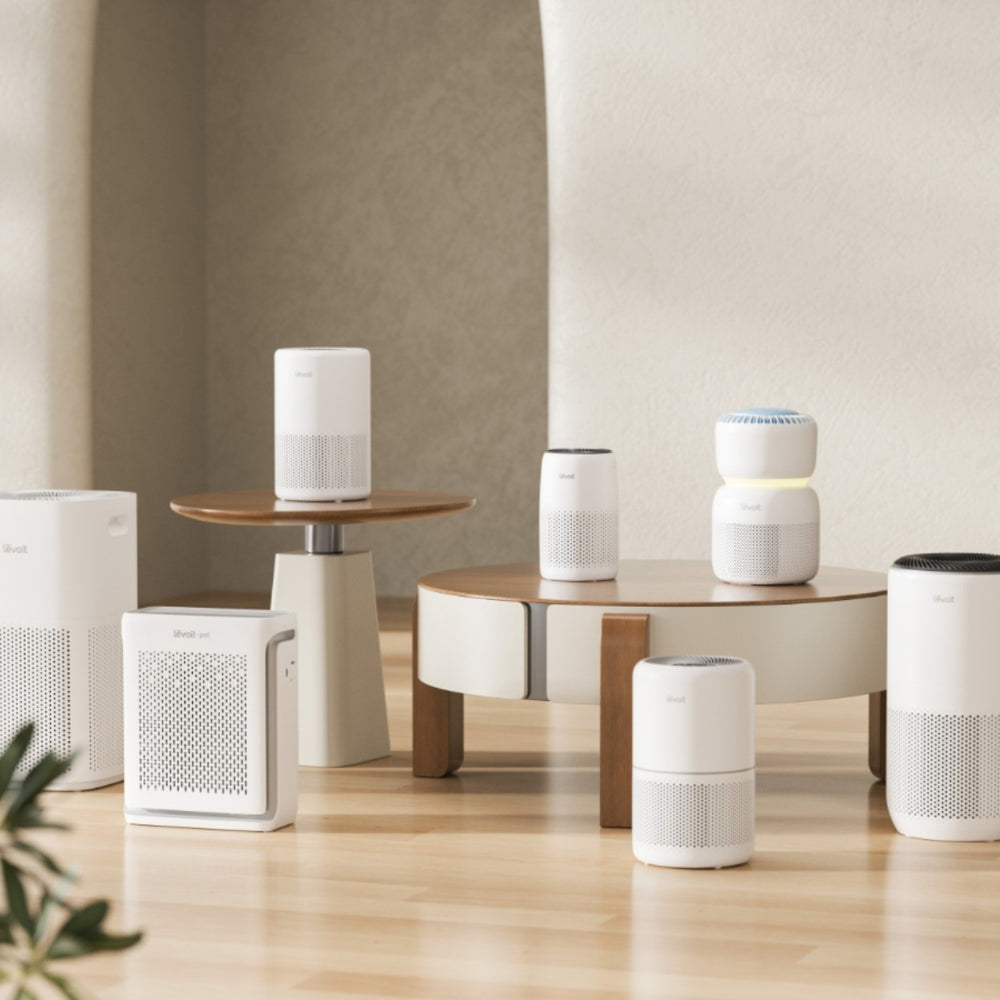
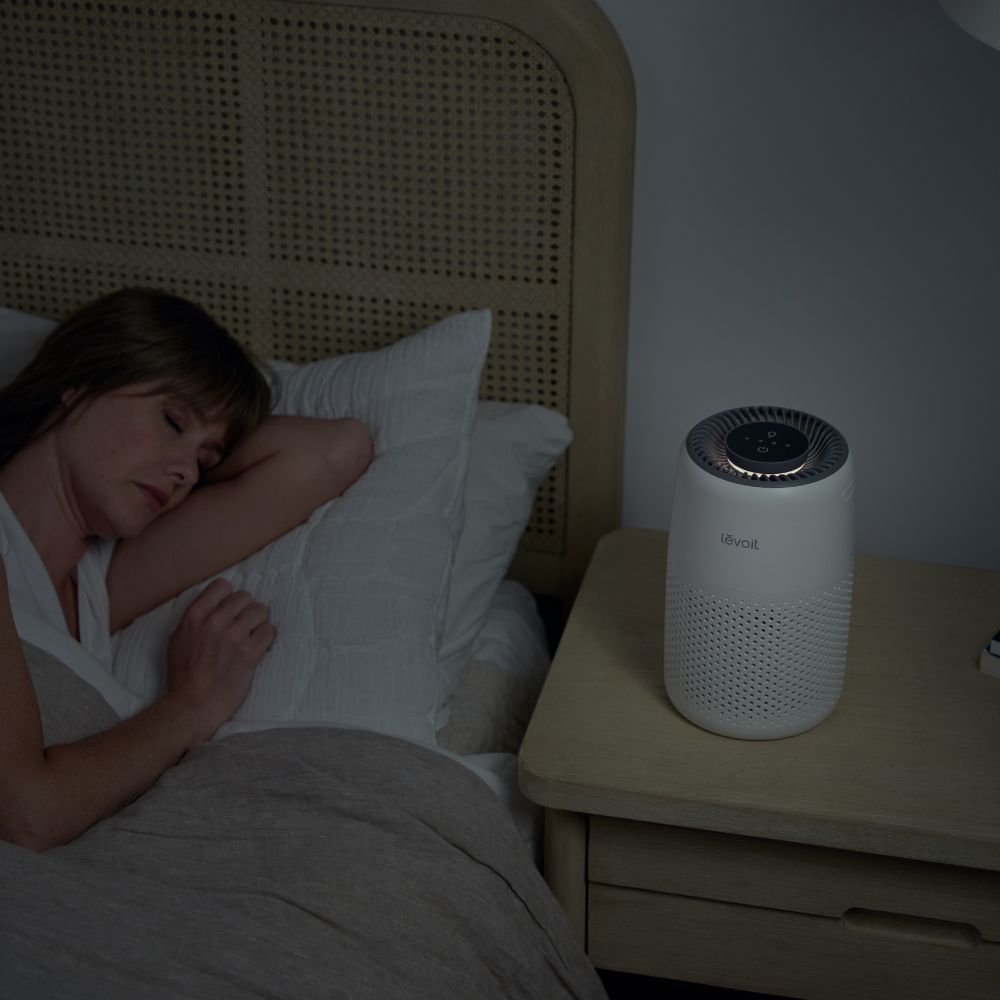
This is where Levoit air purifiers come in. With True HEPA filters that capture 99.97% of microscopic particles — dust, pollen, mould spores, and more — Levoit purifiers work alongside your HVAC system to deliver clean, properly humidified air.
🛡️ الحل: الترطيب + مكافحة الغبار
تجهيز منشأتك لفصل الصيف يعني معالجة كل من الترطيب و مكافحة الغبار.
الترطيب يحافظ على مستويات الرطوبة المثلى، ويحمي السكان من أعراض الهواء الجاف ويقلل انتقال الفيروسات.
مكافحة الغبار تزيل الجسيمات التي تعيد أنظمة المكيفات تدويرها، وتمنع تهيج الجهاز التنفسي وتفاقم الحساسية.
هنا يأتي دور أجهزة تنقية الهواء من ليفويت. بفضل فلاتر HEPA الحقيقية التي تلتقط 99.97% من الجسيمات المجهرية — الغبار، حبوب اللقاح، جراثيم العفن، والمزيد — تعمل أجهزة تنقية ليفويت جنباً إلى جنب مع نظام التدفئة والتهوية وتكييف الهواء (HVAC) لتوفير هواء نقي ورطب بشكل مناسب.
✅ Is Your Facility Summer‑Ready?
Take a moment to assess your environment:
- Do occupants complain of dry eyes, sore throats, or headaches?
- Have you noticed a musty smell when the AC runs?
- Are your AC filters clogged with dust more frequently than they should be?
- Do you or your team experience more respiratory issues during dust storm season?
If you answered yes to any of these, it's time to look beyond temperature control and start managing air quality and humidity as part of your facility's health strategy.
✅ هل منشأتك جاهزة للصيف؟
خذ لحظة لتقييم بيئتك:
- هل يشكو السكان من جفاف العيون أو التهاب الحلق أو الصداع؟
- هل لاحظت رائحة عفنة عند تشغيل المكيف؟
- هل فلاتر المكيف لديك مسدودة بالغبار بشكل متكرر أكثر مما ينبغي؟
- هل تعاني أنت أو فريقك من مشاكل تنفسية أكثر خلال موسم العواصف الترابية؟
إذا كانت إجابتك بنعم على أي من هذه الأسئلة، فقد حان الوقت للنظر إلى ما هو أبعد من التحكم في درجة الحرارة والبدء في إدارة جودة الهواء والرطوبة كجزء من استراتيجية الصحة لمنشأتك.
📝 Disclaimer: This content is for educational and informational purposes only. It does not constitute medical advice. Always consult a qualified healthcare professional for any health concerns or before making decisions related to your health.
📝 إخلاء مسؤولية: هذا المحتوى لأغراض تعليمية وإعلامية فقط. لا يشكل نصيحة طبية. استشر دائماً أخصائي رعاية صحية مؤهل لأي مخاوف صحية أو قبل اتخاذ قرارات تتعلق بصحتك.
🔗 Share & Follow
- 📧 Media Contact : pr.gcc@vesync.com
- 🌐 Official Website : Levoit UAE
- 📱 Official Social Media : Instagram · Facebook · YouTube · TikTok